Tuesday, 16 July 2019
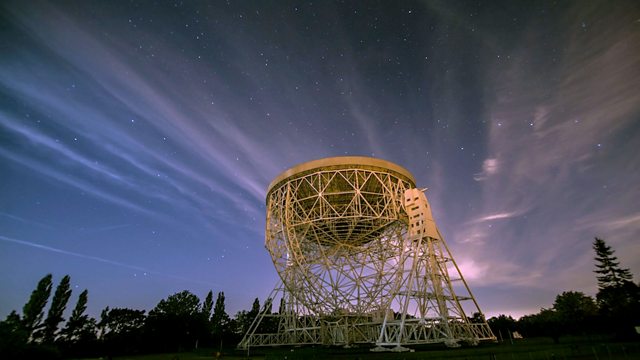
BBC Radio Humberside Interview for Perseids Meteor Shower
Caroline Brocklebank from BBC Radio Humberside visited the Blackburn Leisure Astronomy Society to find out about how to observe the Perseids meteor shower with your eyes and our plans to use an amateur radio receiver and Yagi antenna to detect reflections from the French GRAVES (Grand Réseau Adapté à la Veille Spatiale) space surveillance radar.
Labels:
144 MHz,
Astronomy,
Blackburn Leisure,
BLAS,
Brough,
GRAVES,
Meteor,
Meteor Showers,
Outreach,
Perseids,
Radar,
Science,
STEM
Location:
Blackburn Leisure Astronomy Society
Thursday, 20 December 2018
How Britain Won the Space Race
Look out for the “Timeshift” documentary on BBC iPlayer that charts how Sir Bernard Lovell’s radio telescope was used by both the Americans and Russians during the Space Race.

The programme starts with the experiments using wartime surplus radar equipment to detect the reflections from the ionised trail that is formed as meteors penetrate the Earth’s upper atmosphere. The radio observations were correlated against the visual observations made by volunteers lying on their backs in the open field. From here, things became larger with a fixed dish made up from wire catenaries supported wartime surplus Army antenna masts, with what can only be described as a garden shed on stilts containing the receiving antennae at the focus – I’m not going to paraphrase the whole programme, but the 250ft diameter dish that was built was used to chart the early launches during the cold war when both sides were eager to demonstrate their ability to launch Intercontinental Ballistic Missiles, with everything coming to a head during the Cuban Missile Crisis as one of the first Ballistic Missile Early Warning Systems (BMEWS) to be used by the British in the cold war.
The first part of exploring radio astronomy will probably follow the route of detecting the signals reflected by meteors, making use of the GRAVES radar in France – GRAVES is short for the Grand Réseau Adapté à la Veille Spatiale, which translates to Large Network Adapted to Space Watch. What makes this radar ideal for amateur observations is that it transmits a continuous beam of signals from one site, whilst simultaneously receiving signals from a second geographically separated site elsewhere in France. Secondly, it transmits with sufficient power that it is possible to detect its reflections from the surface of the moon, and finally, it transmits on 143.050MHz, which lies just below the popular 2-metre amateur radio band, and hence I already have most of the equipment needed already to get started, so watch this space...
Labels:
144 MHz,
Blackburn Leisure,
BLAS,
Brough,
GRAVES,
meteors,
Radar,
radio astronomy,
v
Wednesday, 1 August 2018
Repeat of WSPR Experiment from Barmby Tidal Barrier
To provide a comparison with the previous experiment, the WSPRLite was again setup from the Goole Radio and Electronics Society's portable location at Barmby Tidal Barrier. Apart from changing the callsign back to G0VRM, the setup was identical. This time, there was some grayline DX to the Canaries at approximately 8PM, otherwise the results were virtually identical.
Location:
Barmby on the Marsh, Goole DN14 7HR, UK
Tuesday, 24 July 2018
WSPR from a Diamond HF-30HX Mobile Whip
Whilst on holiday in Trawsgoed, near Aberystwyth, Wales I setup my WSPRLite using a Diamond HF-30FX 10 MHz mobile whip. The WSPRLite was configured using the WSPRLite Explorer App using Samsung Galaxy S7, setting the callsign and locations from the phone's GPS, and was left powered from the phone and left running overnight in the car.
Whilst the phone's battery was completely discharged in the morning, the transmitter worked from 8PM until approximately 4AM, and despite the "compromise antenna", contacts into most of Europe were logged.
Location:
Trawsgoed, UK
Sunday, 24 June 2018
Arduino Class Libraries for WSPR and SiLabs Si5351 Clock Generator IC
My first attempt at writing an Arduino sketch that transmitted a WSPR message using an AD9850 DDS Signal Generator module, whilst successful required the WSPR message to be generated using the WSPRcode.EXE and then manually edited into the Arduino Sketch before compiling the code. Ideally, I'd like to be able to read the position and time from the NMEA string from a GPS, encode the message and then transmit it automatically - OK there are niceties such as a User Interface and LCD to contend with!
Looking back at the Etherkits website, they appear to have a module available which has an SiLabs Si5351 Clock Generator mounted into a breakout, as do Adafruit, however they also supply an easily integrated Class Library. Until a recent C# online course at work, I didn't really understand what C++ classes did and how to use them, so it's time to experiment as I've got the example code to compile without error.
I've also got some building to do as I've got some QRP Labs low-pass filter modules to build for 5 and 10 MHz together with a Kanga / M0XPD Si5351 Shield for the Arduino.
Monday, 19 June 2017
Raspberry Pi WSPR Transmitter
Sometimes several things come together that make a really easy project...
Having read several copies of the Official Raspberry Pi Magazine, I was intrigued that one of the issues this magazine actually gave away a Raspberry Pi Zero on the front cover in the same way that computer magazines in the 90's used to have CD-Roms and floppies on the front!
The current incarnation of the Raspberry Pi Zero W has onboard WiFi and Bluetooth networking and with the addition of a Raspberry Pi Stem becomes a complete OTG (On the Go) USB stick - ideal for working away in Lancashire without the need to cart a mouse/keyboard/monitor up to your hotel room! You can even get a 3D printed case online for a few pounds...
Then I found WsprryPi - a WSPR transmitter that uses the Raspberry Pi's onboard frequency generator to transmit WSPR and uses NTP (Network Time Protocol) to discipline the oscillator frequency - all that is needed is an external Low-Pass Filter and you have a little transmitter.
Enter Language Spy with a neat little filter module. I managed to get one for 17m (another one of my favourite bands) before the stock ran out.
The Raspberry Pi output pin is a square-wave switched from 0V to 3.3V and therefore is approximately 1.65V RMS, there are obviously losses in the low-pass filter as the higher harmonics that make up the square wave are lost, however I measured the output at approximately 0.9V(RMS) into a 50Ω load
This works out to approximately 10 mW (or 10 dBm) so QQRP.
Sunday, 14 May 2017
Further Adventures in QRSS...
Having decided to buy the Yaesu SCU-17 USB Sound Card Interface for the FT-817, which provides a dedicated USB sound card, serial port and PTT switching etc., I tuned my receiver to 10.13870 MHz and shortly afterwards received an off-air signal from IK2CMN over several minutes (as shown in the WSJT waterfall display below).
Setting my own callsign was a doddle and shortly afterwards I managed to get the OpenBeacon to transmit "G0VRM IO93QT" in QRSS into the dummy load, however it's not quite as clean as the off-air signal. Following the instructions, I uploaded a WSPR string and it worked first time!
Notice that there are two entries for G0VRM, however one is 35 dB down and is probably some oddity of the radio being so close to the transmitter, although it appears to be very stable! Looking promising, however connecting the beacon to an external antenna via a Z-match proved to be unsucessful.
Subscribe to:
Posts (Atom)