Presentation to Blackburn Leisure Astronomy Society (BLAS) about the Radar Observations of the Perseids Meteor Shower made on the 12th August using the French GRAVES (Grand Réseau Adapté à la Veille Spatiale) Radar. We set off looking for meteors but ended up capturing lunar echoes on the Waterfall display !
Showing posts with label Brough. Show all posts
Monday, 12 August 2019
Tuesday, 16 July 2019
BBC Radio Humberside Interview for Perseids Meteor Shower
Caroline Brocklebank from BBC Radio Humberside visited the Blackburn Leisure Astronomy Society to find out about how to observe the Perseids meteor shower with your eyes and our plans to use an amateur radio receiver and Yagi antenna to detect reflections from the French GRAVES (Grand Réseau Adapté à la Veille Spatiale) space surveillance radar.
Labels:
144 MHz,
Astronomy,
Blackburn Leisure,
BLAS,
Brough,
GRAVES,
Meteor,
Meteor Showers,
Outreach,
Perseids,
Radar,
Science,
STEM
Location:
Blackburn Leisure Astronomy Society
Thursday, 20 December 2018
How Britain Won the Space Race
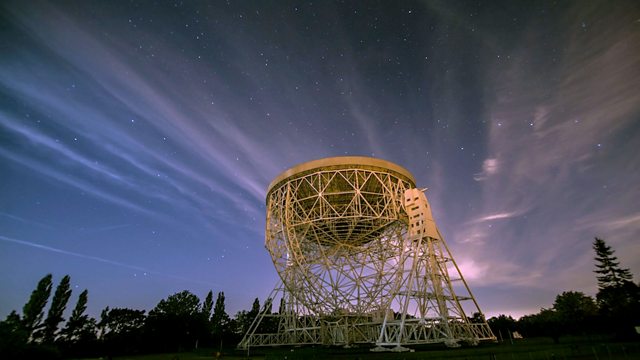
Look out for the “Timeshift” documentary on BBC iPlayer that charts how Sir Bernard Lovell’s radio telescope was used by both the Americans and Russians during the Space Race.

The programme starts with the experiments using wartime surplus radar equipment to detect the reflections from the ionised trail that is formed as meteors penetrate the Earth’s upper atmosphere. The radio observations were correlated against the visual observations made by volunteers lying on their backs in the open field. From here, things became larger with a fixed dish made up from wire catenaries supported wartime surplus Army antenna masts, with what can only be described as a garden shed on stilts containing the receiving antennae at the focus – I’m not going to paraphrase the whole programme, but the 250ft diameter dish that was built was used to chart the early launches during the cold war when both sides were eager to demonstrate their ability to launch Intercontinental Ballistic Missiles, with everything coming to a head during the Cuban Missile Crisis as one of the first Ballistic Missile Early Warning Systems (BMEWS) to be used by the British in the cold war.
The first part of exploring radio astronomy will probably follow the route of detecting the signals reflected by meteors, making use of the GRAVES radar in France – GRAVES is short for the Grand Réseau Adapté à la Veille Spatiale, which translates to Large Network Adapted to Space Watch. What makes this radar ideal for amateur observations is that it transmits a continuous beam of signals from one site, whilst simultaneously receiving signals from a second geographically separated site elsewhere in France. Secondly, it transmits with sufficient power that it is possible to detect its reflections from the surface of the moon, and finally, it transmits on 143.050MHz, which lies just below the popular 2-metre amateur radio band, and hence I already have most of the equipment needed already to get started, so watch this space...
Labels:
144 MHz,
Blackburn Leisure,
BLAS,
Brough,
GRAVES,
meteors,
Radar,
radio astronomy,
v
Subscribe to:
Posts (Atom)